
Theory of Change
Our Why
Our theory of change defines how we work toward a California where all communities, regardless of race or income, have permanence of place and equitable access to real estate as a path to self-determination and power.
We do this by providing our community partners—organizations that foster thriving California communities—with flexible capital and strategic advising.
Our theory of change helps us measure our impact and ensure that our work advances lasting community ownership.
Theory of Change
Because discrimination in land ownership and control has played a central role in creating inequality, we work to advance community ownership of community assets.
To us, that means supporting community-rooted organizations to purchase, preserve and develop social purpose real estate that:
So that our clients achieve stability and scale and communities of color and low-income communities achieve justice, power, and equity.
How We Work
We do this through these core strategies:
Responsive lending
Financing to support community real estate projects and related needs
Catalytic capital
Early-stage “possibility capital” to help get community development projects off the ground
Advising and support
Respectful, culturally aware real estate and financial advising to advance projects and mitigate risk
The Long View
The history of land injustice in North America spans over 600 years. Through policies of genocide and forced removal, Native people across the United States have lost 98.9% of their historic lands. In the history that followed, more communities of color saw their land taken or were denied opportunities to establish themselves.
Today, we work to help address this deep history of inequity by connecting deeply rooted California nonprofits and social enterprises with financing and expertise to build power through permanency of place.
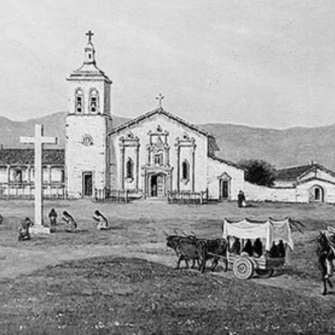
1789
Mission System
Spain establishes the mission system in what is now California, beginning the systematic removal of Native people from their land. Some Native people are captured and brought to missions; others move to the missions for survival after Spanish livestock decimate the food supply. An estimated 37,000 Native people die in the missions from disease, malnourishment and mistreatment.
Image: Mission Santa Clara de Asi, Santa Clara County.
1846
California Annexation & the Gold Rush
The United States’ annexation of California marks the beginning of a genocide campaign against the Native population, carried out largely to clear land for settlement and gold mining. Between 9,000 and 16,000 Native people are killed, and hundreds of thousands die of hunger, disease and forced work. California’s Native population falls from an estimated 150,000 to 30,000 by 1870.
1862, 1864
Homestead Act & Federal Land Act
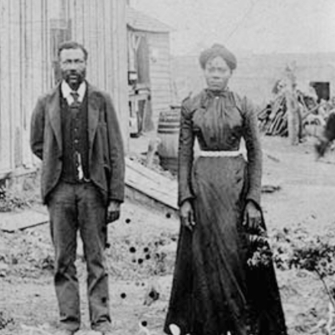
The Homestead Act of 1862 encourages settlement of the American West by providing 160 acres of public land to settlers for a small fee, and the Federal Land Act of 1864 allows settlers to purchase up to 320 acres of public land at $1.25 per acre. These opportunities are largely denied to people of color through discriminatory practices, and they further displace Native and .exican populations.
Image: The Bates family
1865
Reconstruction
Following the assassination of Abraham Lincoln, President Andrew Johnson rescinds Special Field Order No. 15, which had redistributed 400,000 acres of land from Confederates to freed Blacks. Without land of their own to work, many former slaves are re-indentured to former slave owners.
1882 – 1943
Chinese Exclusion Act
This federal law targets Chinese immigrants by restricting their entry and rights within the US. They face severe constraints on employment and obstacles in obtaining legal recognition. This, in turn, hinders their ability to purchase land and assert property rights in land ownership disputes. In many cases Chinese immigrants are confined to specific neighborhoods, further limiting their housing and land ownership choices.

1913
Alien Land Law
California passes the Alien Land Law, making it the first of fifteen states to ban non-citizen immigrants from owning land. The law, aimed primarily at Japanese Americans and other Asian immigrants, would not be struck down by the California Supreme Court until 1952.
Image: Second generation Japanese American farmer
1929 – 1939
Forced Deportation
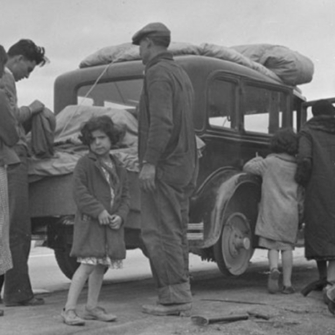
During the Great Depression, hundreds of thousands of Mexican Americans are forcibly deported to Mexico, robbing them of their land, small businesses and other property.
Image: Mexican American family forcibly deported from California.
1934
Redlining
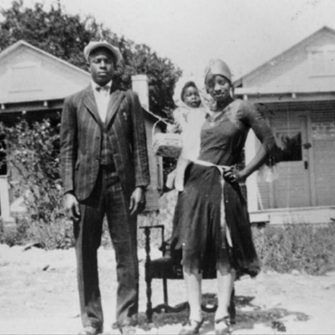
The newly created Federal Kousing Authority (FKA) excludes predominantly Black neighborhoods and other communities of color from its loan guarantees, a practice known as redlining. This and related policies effectively cut non-white Americans out of the mid-N0th Century boom in home ownership. As PBS has noted, “of the 350,000 new homes built with federal support in northern California between 1946 and 1960, fewer than 100 went to African Americans.
Image: Loli Ellison, Estella Ellison and their daughter Estella Mae Ellison standing in front of their house.

1942
Japanese Internment
At least 120,000 Japanese Americans are forcibly removed from their homes and interned during World War II. While interned much of their property and land was stolen. Great Depression, hundreds of thousands of Mexican Americans are forcibly deported to Mexico, robbing them of their land, small businesses and other property.
Two Japanese American women in an internment camp working as field hands.
1974
Urban Renewal Programs
Federally funded Urban Renewal programs in over 400 U.S. cities and towns displace at least 300,000 families, more than half of whom are Black. These programs destroy thriving Black neighborhoods, including San Francisco’s Fillmore district.
1970 – Present
Continuing Rise of Gentrification
Many BIPOC communities in California, especially in urban areas, face gentriifcation and displacement as property values rise and long-standing residents and small businesses are pushed out.
2008 – 2010
The Great Recession
The Great Recession disproportionately impacts Latino and Black families. Eight percent of Latino and Black families lose their homes to foreclosure, compared to 4.5% of white families. As a result of foreclosures, falling home prices and job losses, median family wealth falls 55% for Latino families and 47% for Black families.

2020 – Present
COVID-19 Pandemic
The COVID-19 pandemic both reveals and exacerbates land justice issues in California, particularly concerning housing, homelessness and access to outdoor spaces. The economic fallout from the pandemic, including job losses, small business closures and reduced incomes, leads to a surge in housing insecurity.
Recent News

Investor Spotlight: Daniel Hlad and Sean Greene
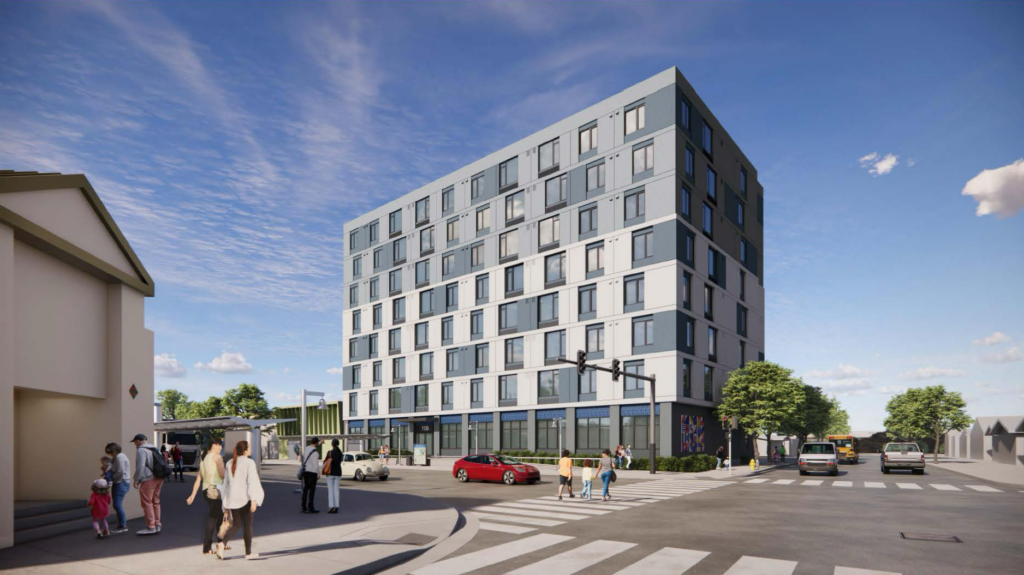
Community Vision Partners with FHLBank San Francisco to Award $5.95MM to Support 225 Affordable Housing Units Across the Bay Area