Nearly 40 years ago, Community Vision was founded by a group of community-minded individuals who believed they could put their own money to work in support of building vibrant communities rooted in self-determination.
Individual investors have remained an important part of that vision ever since. Today, more than 260 individuals invest nearly $20 million in our loan fund, providing capital that supports community-rooted organizations across California.
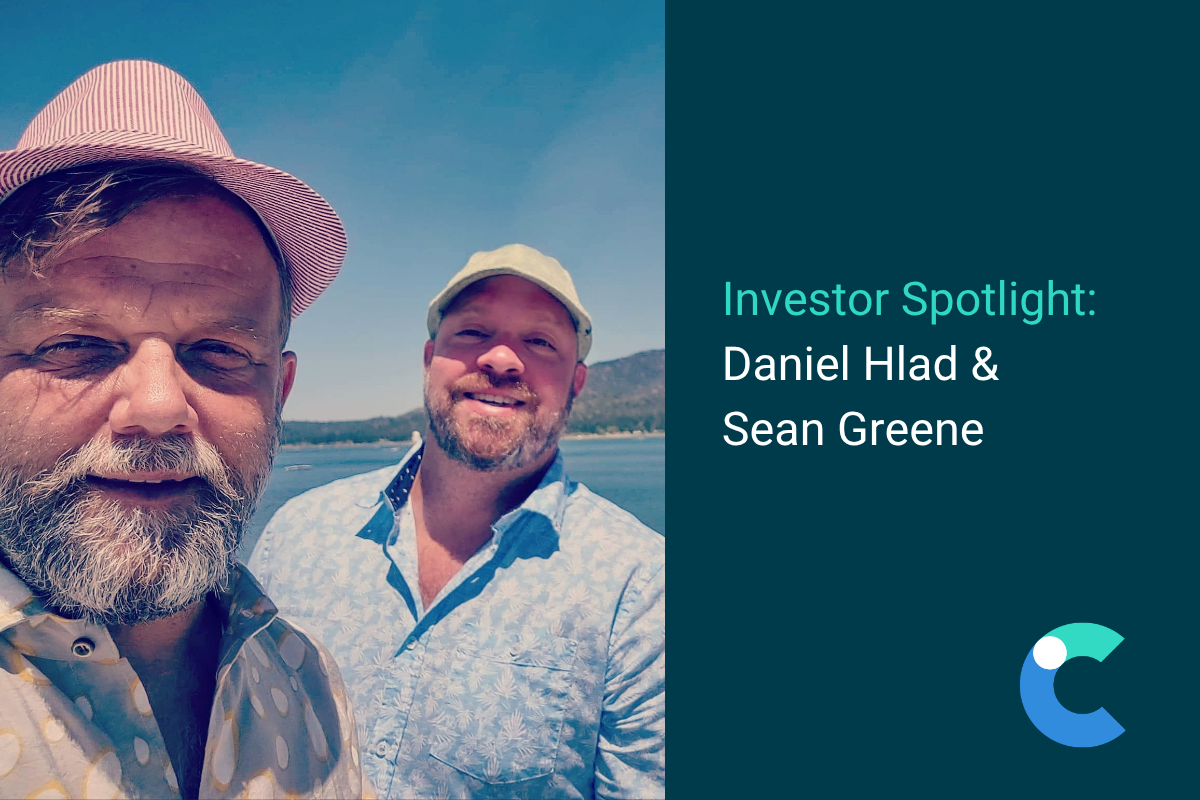
Daniel Hlad and his husband, Sean Greene, are two of those investors. They began investing with Community Vision in 2018, but Daniel’s connection to the organization goes back much further.
Seeing the impact firsthand
Daniel and Sean both spent decades working in San Francisco’s nonprofit sector. Before joining Community Vision’s staff in the mid-2010s, Daniel spent more than a decade at Hospitality House, a nonprofit serving people experiencing homelessness and residents of the Tenderloin and South of Market neighborhoods.
It was through Hospitality House that Daniel first encountered Community Vision—then the Northern California Community Loan Fund. After purchasing a building, Hospitality House faced serious financial challenges and turned to Community Vision for support. Community Vision helped connect them to funders and also restructured the nonprofit’s financing, allowing Hospitality House to stabilize, maintain ownership, and remain rooted in the neighborhood.
The experience showed Daniel both the value of nonprofit ownership and the importance of having the right partners to make it sustainable.
“When you own, you’re not just tossed around as a nonprofit anymore,” he said. “You have actual property, you have roots, and that gives you power. You have a lasting stake in the community and more control over your own future.”
Years later, as a Community Vision staff member, Daniel saw that impact all around him. One morning, on his mile-long walk across SoMa to the gym, he began counting the community assets along his route that Community Vision had helped finance. By the time he arrived, he had counted around a dozen.
“I could go into my neighborhood and literally see the impact,” he said.
A different relationship with capital
Daniel didn’t come to Community Vision with a background in finance or investing. But his work there changed the way he thought about capital—and the inequities built into who has access to it.
He came to see CDFIs as one way to help fill the gaps left by conventional financial systems, directing capital toward communities and organizations that have been historically blocked from access. He was especially drawn to models like community land trusts and cooperatives that give communities greater ability to shape and own their futures.
So when Daniel and Sean decided to invest personally, the decision was easy.
“Investing was a no-brainer for us,” Daniel said. “We knew that it was going to go to good work.”
Daniel had seen firsthand not only where Community Vision’s capital went, but how the organization approached its work: with deep expertise, strong relationships, and a commitment to structuring financing around the needs of organizations and communities.
“It’s very people-centered,” he said. “The investments that Community Vision makes are really community directed.”
An investment in community
For Daniel and Sean, investing offers a way to put their money to work for the communities and causes they care about. And participating doesn’t require enormous wealth.
Daniel points to a simple example: if you have $1,000 sitting in a savings account that you don’t need immediate access to, you could instead invest it into communities.
Nearly four decades after individual investors helped launch Community Vision, people like Daniel and Sean continue that legacy. Their investments join with others to finance affordable housing, nonprofit facilities, community health centers, cultural spaces, and other lasting community assets across California.
For Daniel, those investments aren’t abstract. They were the places he could see on his morning walk through his own neighborhood—a reminder that where we put our money matters, and that an individual investment can become part of something much bigger.