Creating community-owned and community-serving real estate takes more than financing individual projects. It requires leaders equipped with the knowledge and tools to navigate complex real estate transactions, organizations prepared to steward assets for long-term community benefit, and networks that allow practitioners to learn from one another and strengthen the broader field. That’s why Community Vision’s work extends beyond lending to include advising, training, and convening leaders across the community ownership ecosystem.
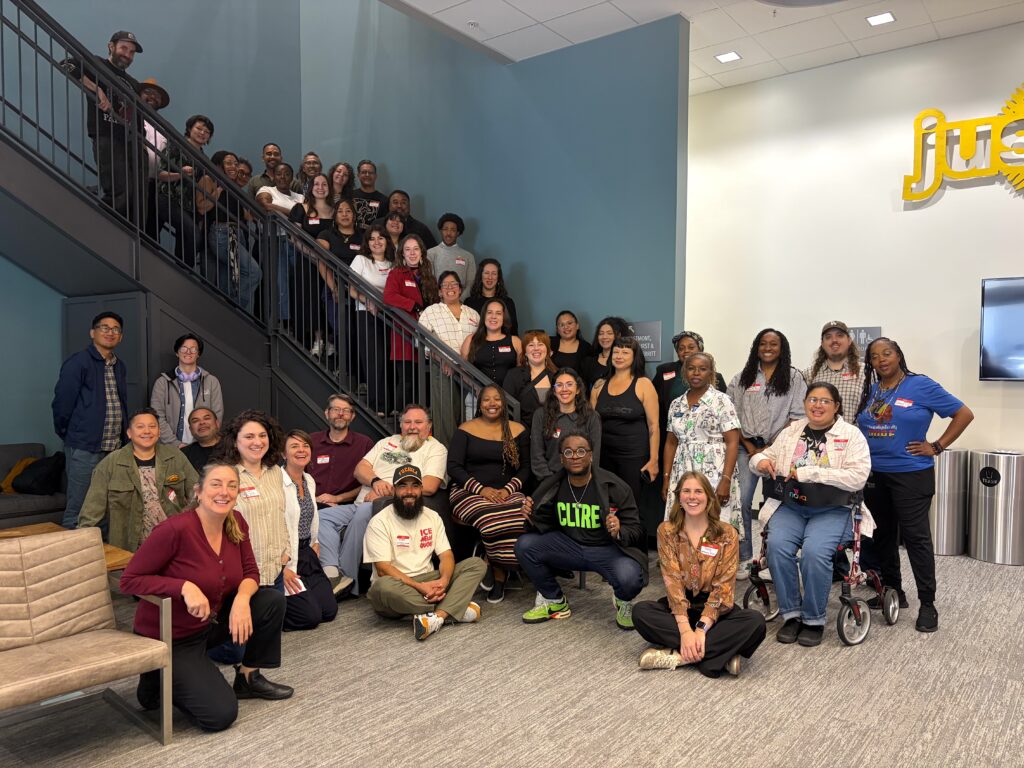
This spring, Community Vision brought together dozens of community developers, arts organizations, and community real estate leaders through cohort programs, site visits, and peer learning opportunities designed to advance community ownership.
These gatherings highlighted a common theme: building community ownership means investing in people, relationships, and collective knowledge—not just buildings.
Building capacity for community ownership
Community Vision recently convened participants from our CalCORE and CREATE cohort programs for three days of learning, connection, and exploration in Oakland.
Launched in partnership with Genesis LA, CalCORE (California Community-Owned Real Estate) is a cohort-based training program that supports community-based developers working to advance local ownership of social purpose real estate. This year’s cohort is focused on corridor activation.
CREATE (Community Real Estate – Arts to Equity) is a two-year cohort program that helps arts and culture organizations build long-term financial resilience and real estate readiness.
Together, these programs help organizations develop the skills, relationships, and strategies needed to acquire, steward, and sustain community-serving real estate.
A highlight of the convening was visiting three Community Vision clients and partners whose projects demonstrate community ownership in action.
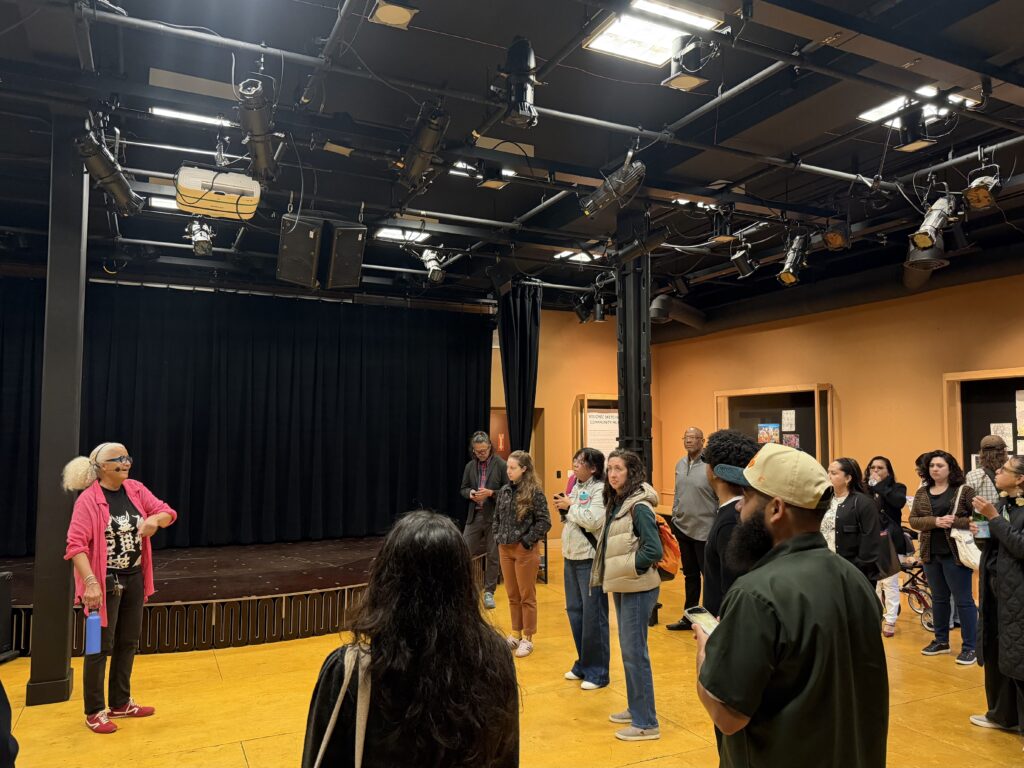
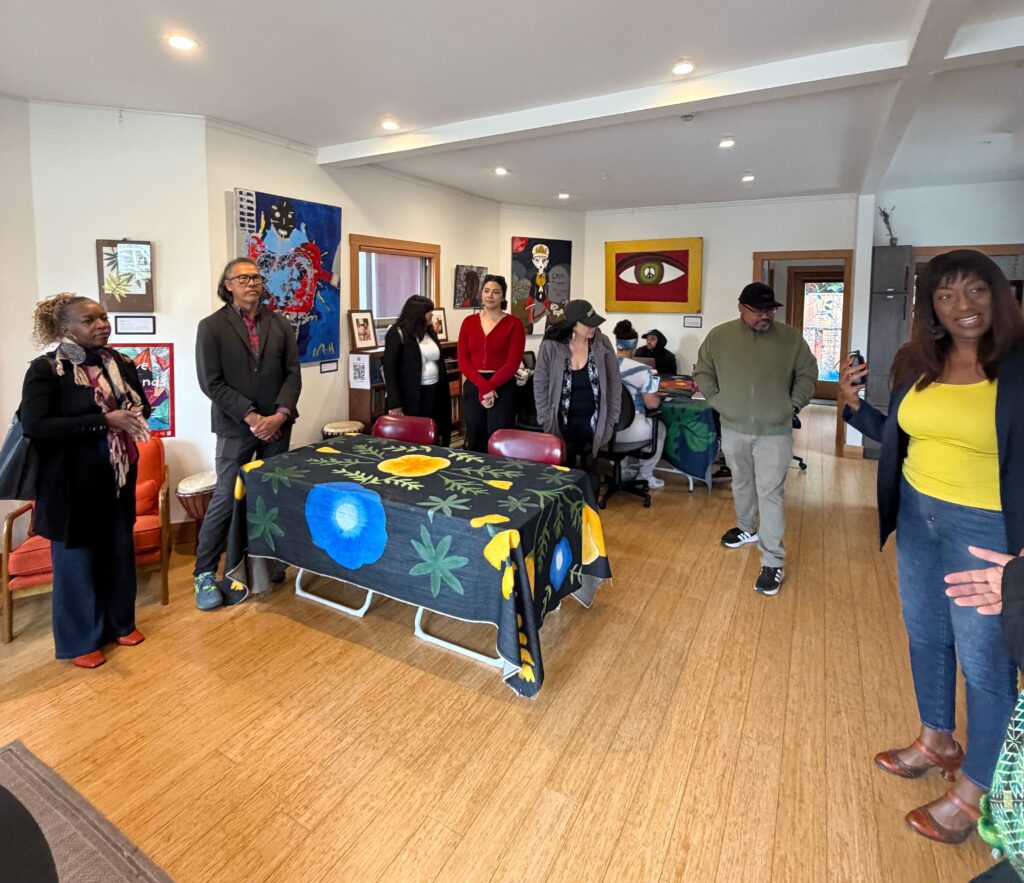
At EastSide Arts Alliance, participants saw how arts and culture spaces can anchor neighborhood development and learned about the organization’s partnership with Satellite Affordable Housing Associates (SAHA), which added affordable housing above the arts facility.
At Center for ArtEsteem, participants toured a youth-focused arts center that illustrates how real estate ownership can support long-term growth. After renovating and activating its primary building, the organization is now planning a second facility that will help meet needs identified through years of serving young people.
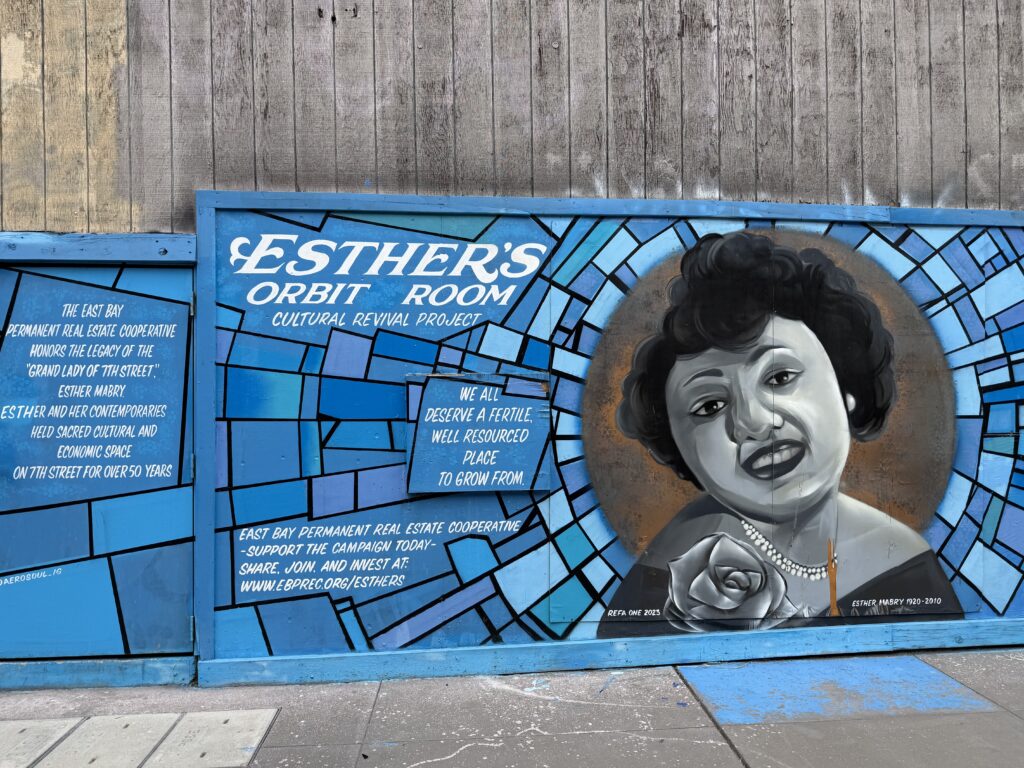
The group also visited several adjoining properties stewarded by East Bay Permanent Real Estate Cooperative (EBPREC), including Esther’s Orbit Room, a historic jazz venue on Oakland’s 7th Street corridor, and The Barn, a neighboring building that houses the cooperative’s offices. Participants learned about EBPREC’s efforts to acquire and steward additional properties along the corridor, demonstrating how community ownership can help reclaim spaces impacted by decades of displacement and disinvestment.
Together, these visits offered practical examples of how organizations are using real estate ownership to preserve culture, strengthen communities, and build long-term resilience.
Strengthening the social purpose real estate field
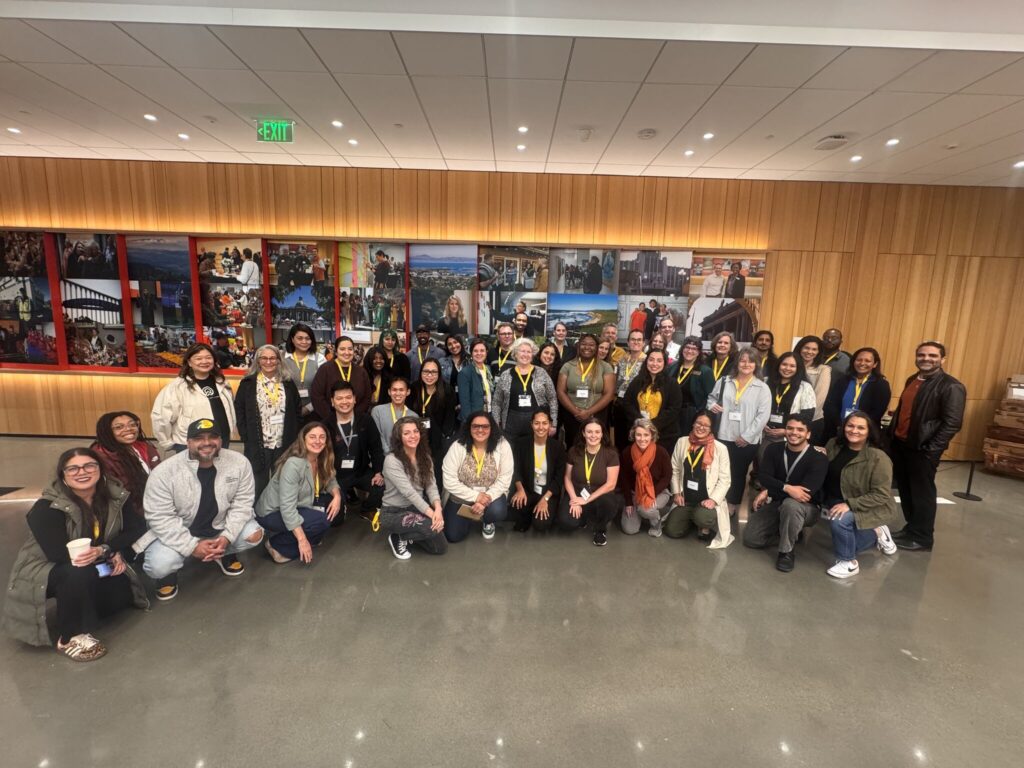
Just days later, Community Vision joined the Chan Zuckerberg Initiative (CZI), Sobrato, EPACENTER, and Center for Creativity in convening approximately 50 leaders from 25 organizations stewarding more than 35 community-serving spaces across the Bay Area.
Designed around participant feedback collected before the event, the gathering focused on sharing operational best practices, strengthening peer relationships, and exploring strategies for long-term sustainability. Participants also toured several community spaces, including EPACENTER, the Sobrato Center for Nonprofits’ Redwood Shores location, the Center for Creativity, and CZI’s community space before coming together for facilitated discussions.
Across the tours and conversations, a common theme emerged: community-serving spaces are not simply facilities—they are platforms for collaboration, community connection, and shared growth.
The strongest models weren’t just providing square footage. They were investing in relationships, shared resources, cultural programming, and the infrastructure needed for organizations and communities to thrive together.
Discussions focused on partnerships, operational models, financial sustainability, and strategies for strengthening the broader social purpose real estate field. Just as importantly, the convening created space for participants to connect, share lessons learned, and build relationships across a growing network of community-serving spaces.
Growing the ecosystem
These gatherings reinforced a simple truth: community ownership isn’t just about real estate.
It’s about the relationships, leadership, and collective knowledge that allow communities to preserve what matters, create new opportunities, and shape their own futures.
The buildings are important. But the people, partnerships, and ideas behind them are what make lasting ownership possible.
That work doesn’t happen in isolation. It grows through shared lessons, trusted relationships, and opportunities to learn from what’s working. Whether through cohort programs, site visits, or peer convenings, we’re committed to facilitating opportunities for ideas, strategies, and inspiration to move across organizations and communities.
And as more organizations gain the tools to acquire, steward, and sustain community-serving spaces, the possibilities for community ownership continue to grow.
Meet our current cohorts
CalCORE
- 7GENerations Coming Home ArtHouse (7GEN ArtHouse) — Livingston
- United Cambodian Community — Long Beach
- Sacred Heart Community Services — San Jose
- 7th Street Thrives — Oakland
- Black Zocalo — Fresno
- CLTRE / Unseen Heroes — Sacramento
- Community Coalition — Los Angeles
- Koreatown Youth and Community Center — Los Angeles
- Kultivate Labs — San Francisco
- Pacoima Beautiful — Los Angeles
- South Tower Community Land Trust — Fresno
CREATE
- Root Division — San Francisco
- Brava! For Women in the Arts — San Francisco
- Kearny St. Workshop — San Francisco
- Lyrical Opposition — Daly City
- BAMBD CDC — Oakland
- Center for Urban Excellence — Vallejo
- Local Color — San Jose
- La Peña — Berkeley
- Alternative Music Foundation — Berkeley
- La Casa de Cultura y Arte — Gilroy
- BreakBox Thought Collective — Fresno
- Dulce Upfront — Fresno
- The LAByrinth Art Collective — Fresno
- Root Access Hackerspace — Fresno
- Community Media Access Collaborative (CMAC) — Fresno
- South Tower Community Land Trust — Fresno