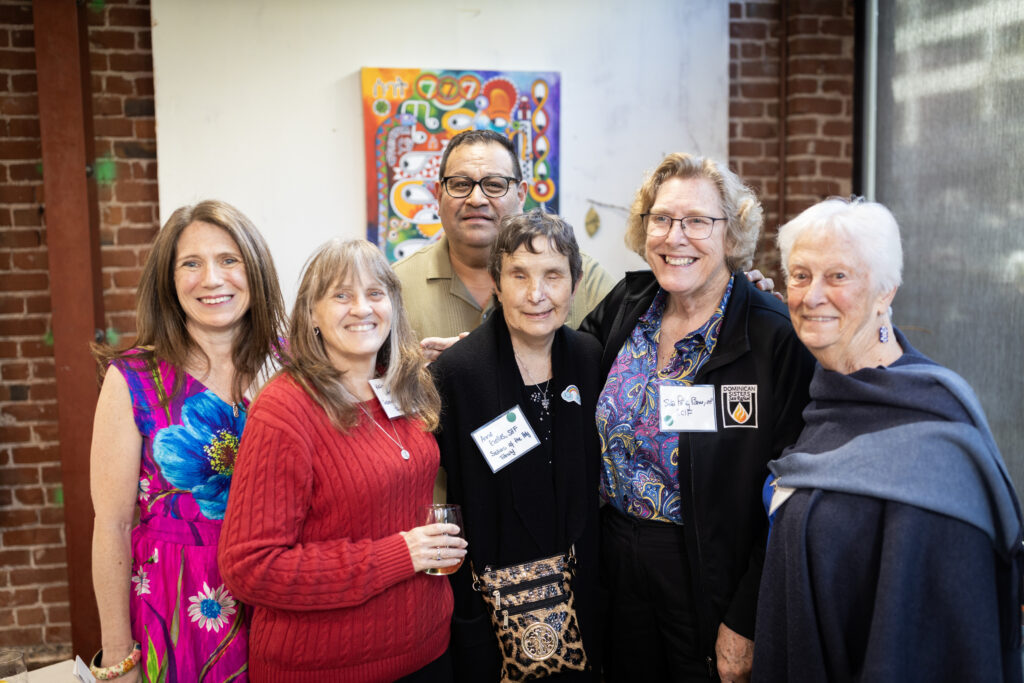
L-R: Catherine Howard (Community Vision President), Kathy Littrell, SHF, Eddy Lopez (Community Vision Sr. Investor Relations Associate), Anne Gelles, SHF, Patricia Boss, OP, and Patricia Bruno, OP
For decades, Catholic sisters across the country have helped shape the field of community development finance.
Long before community investing became mainstream, congregations of women religious were lending capital to nonprofits, credit unions, and emerging community development financial institutions (CDFIs) serving low-income communities and communities of color. Their investments were rooted not in maximizing financial return, but in advancing economic justice and human dignity.
The funds they invested were often their congregations’ shared assets—including retirement resources that support sisters in old age. Living in community and pooling their earnings into common funds, the sisters saw mission-aligned investing as an extension of their ministry: putting capital to work in service of communities, while preserving resources for future generations of sisters.
That legacy continues today in part through the Religious Communities Impact Fund (RCIF), a collaborative investment fund founded in 2008 by sisters seeking to deepen their collective impact through mission-aligned investing.
“Individual congregations were already making community investments into organizations like Community Vision, but they realized they could accomplish more together. Pooling their resources created greater efficiency, stronger partnerships, and greater impact,” says Sarah Geisler, Executive Director of RCIF.
Today, RCIF represents 40 congregations of Catholic sisters from across the country.
A Shared History in Community Development Finance
Community Vision has a long history with RCIF—dating back to before RCIF itself existed.
In 1989, the Adrian Dominican Sisters—one of RCIF’s founding congregations—became one of Community Vision’s first institutional investors, back when the organization was still known as the Northern California Community Loan Fund. Those early investments reflected a growing movement among Catholic sisters to place capital directly into underserved communities, often partnering with intermediaries like CDFIs and credit unions to do so. In fact, many early CDFIs began with investments from congregations of Catholic sisters committed to economic justice and community empowerment.
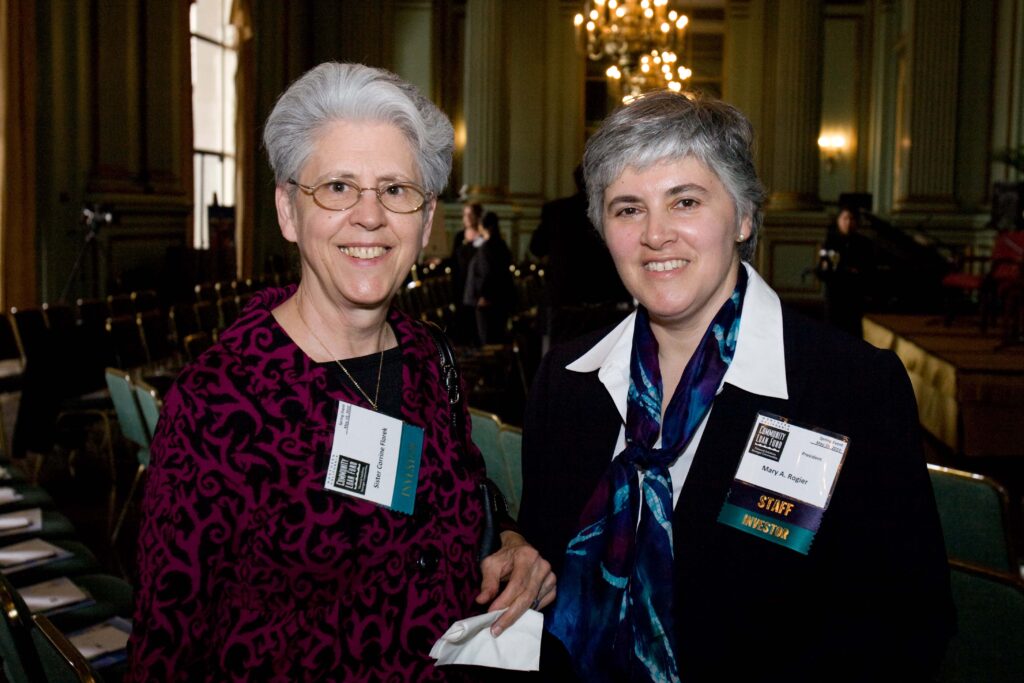
Among the leaders helping shape that movement was Sister Corinne Florek, OP, a Dominican Sister and pioneer in community development finance. Over a four-decade career, Sister Corinne helped build many of the foundational practices and values that continue to define the CDFI field today. She worked with some of the nation’s earliest community development loan funds and land trusts, helped direct mission investments through the Adrian Dominican Sisters, and later became the founding Executive Director of RCIF.
In 2010, Sister Corinne received the Ned Gramlich Lifetime Achievement Award for Responsible Finance from Opportunity Finance Network in recognition of her groundbreaking contributions to the field. During the award presentation, Mary Rogier, who was then President of Northern California Community Loan Fund (NCCLF)—now Community Vision—introduced her, reflecting the longstanding partnership between the organizations.
“The sisters were really vested in Community Vision and the work that you were doing,” Geisler says. “There’s some deep history there. Community Vision was one of RCIF’s original partners because the sisters in California really believed in the work and the model that was being built.”
When RCIF officially launched in 2008, five existing investments in Community Vision totaling $220,000 were transferred from individual congregations into the newly formed pooled fund, helping establish RCIF’s founding capital base.
“You were one of our original partners,” Geisler says. “That was important for our genesis.”
Investing for Community Ownership and Economic Justice
RCIF was created after congregations recognized that nonprofits increasingly needed larger loans and more sophisticated underwriting than individual congregations could efficiently provide on their own. By pooling resources into one professionally managed fund, RCIF enabled larger-scale community investment.
“The critical factor was empowering low-income people through access to affordable capital,” Geisler explains. “Whether for housing, small business development, childcare, or nonprofits providing essential services.”
That mission closely aligns with Community Vision’s work supporting community ownership and community-controlled assets across California.
“What really resonates is Community Vision’s focus on community control—not for just any community, but for communities of color, low-income communities, and communities of women,” Geisler says. “It’s about creating greater control over their futures.”
A Relationship Built on Shared Values
For RCIF, investing is fundamentally relational.
“We’re not looking to invest for profit,” Geisler says. “We’re looking to invest for impact and with the assurance that our values are aligned.”
Geisler describes Community Vision as a responsive and collaborative partner, citing regular communication, transparency, investor engagement, and strong relationships across the organization. She also points to Community Vision’s collaborative approach during underwriting and renewal conversations.
“There was collaboration and understanding on what we needed and what Community Vision could do,” Geisler says. “At the end of the day, we got to a place that met both of our needs.”
Over time, RCIF’s investment in Community Vision has steadily grown. What began as $220,000 in transferred founding investments has expanded over the years to nearly triple that amount.
“You are one of our largest investees,” Geisler says. “That speaks to the quality and confidence of the work that you do, the way that you do it, and what we see for the future.”
Looking Ahead
As Community Vision continues its work across California, RCIF looks forward to continuing the partnership and seeing broader influence in the field.
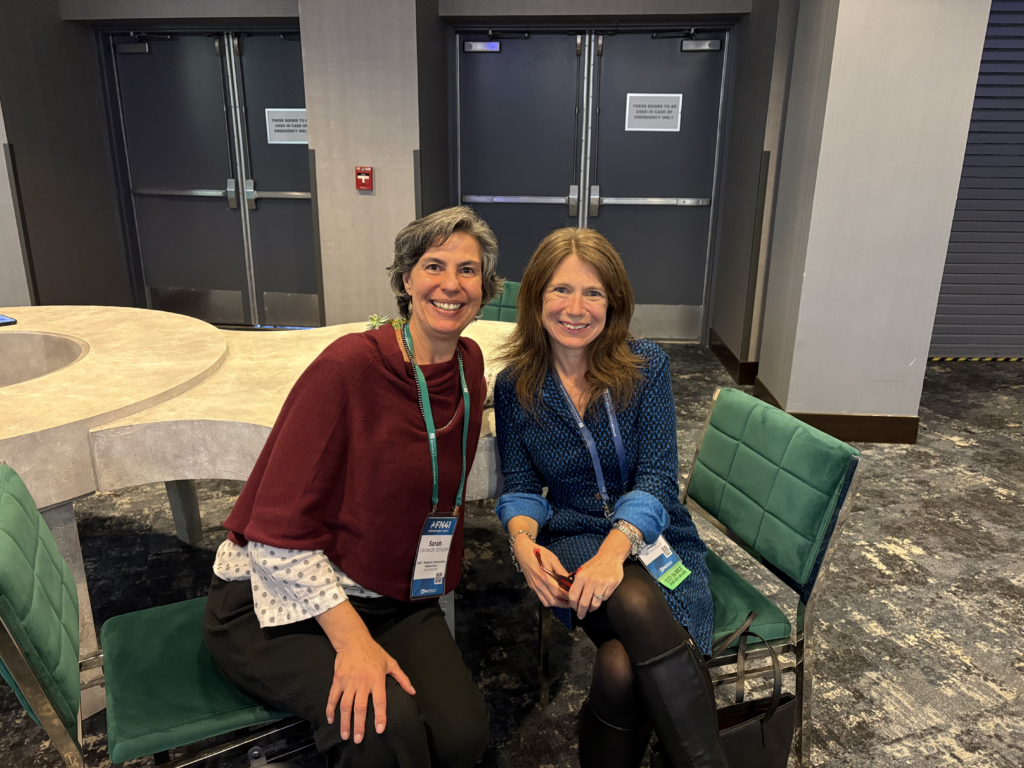
“What excites me most is the thought leadership that Community Vision provides and the way you think about building communities,” Geisler says. “Community Vision does not look at the work it does as transactional. It’s about relationships.”
RCIF is especially inspired by Community Vision’s commitment to community ownership, community wealth-building, and affordable housing—priorities deeply connected to the sisters’ longstanding ministry of economic justice.
“Safe, affordable housing is a human right and a matter of human dignity,” Geisler says. “We’re looking at organizations providing those essential services that lift people up.”
For RCIF, supporting Community Vision is about more than financing projects. It is about investing in a long-term vision for community ownership, equity, and shared prosperity.
“We want to ensure, as best we can, that Community Vision has the resources to do the good work that you do,” Geisler says. “We are really happy and delighted to support the kind of work you’re doing.”